Guide
Buzz Cut for Balding Men: Match the Cut to the Pattern
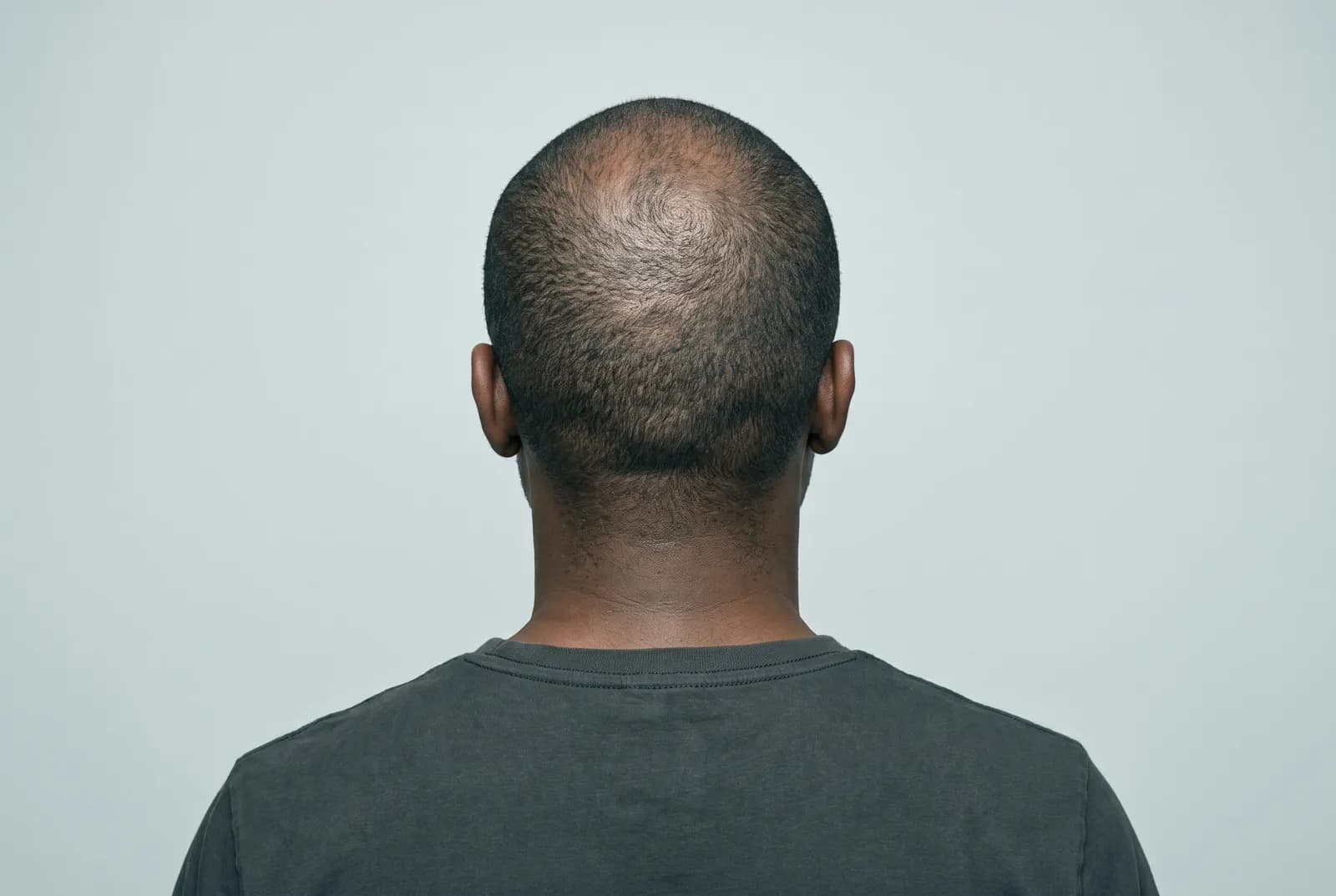
This page matches the cut to the pattern. If you're not sure which pattern you're in, that's a two-minute job for the photo tool — and worth doing first, because everything below keys off it.
Pattern one: the receding front
If the loss is all at the hairline — temples stepping back into an M — you're the classic case, and the classic answer holds: a #2 on top with #1 or skin sides mutes the corners and keeps the look deliberate. We keep a full guide on exactly this pattern, guard by guard, so this page won't repeat it; the one-line version is match the guard to the depth of recession, shorter as it deepens.
Pattern two: the thinning crown
A crown patch punishes length. Hair around a thin crown, grown even moderately long, splays away from the thin spot and widens it visually — and because you can't see your own crown, you're the last to know. Buzzed to a #2 or #3, the crown reads as texture rather than absence: the eye sees an even field with a slightly lighter zone instead of a hole in a hairstyle.
One honest caveat: under bright overhead light, a short buzz shows a genuinely bald crown spot more plainly than some longer styles would. The trade is worth it — the longer styles fail everywhere except the mirror you check them in — but if the crown is fully bare rather than thinning, you're closer to the shave conversation than the buzz conversation.
Pattern three: front and crown together
When both zones are going, the strip between them is doing all the cosmetic work, and every centimetre of length makes that strip look more like what it is — a bridge with traffic problems. This is #1-guard territory, possibly #0.5: even everything out and let the whole top read as one short surface. It's also the pattern where it's worth knowing your stage precisely, because 'both zones, bridge holding' and 'both zones, bridge going' sit two Norwood stages apart and lead to different decisions about what comes after the buzz.
When the buzz stops being the answer
The buzz thrives on thinning and moderate loss; it struggles once large areas are properly bare. A #1 buzz over a mostly-bald top and full sides can develop the horseshoe silhouette — at which point the comparison that matters is buzz versus full shave, and the shave frequently wins on sheer intentionality.
The buzz is also, for many men, the rehearsal rather than the destination: a way to discover that their skull shape is fine, that stubble suits them, that nobody at work blinked. If that's where you suspect you're heading, our shave-or-not check asks the seven questions that actually decide it.
Know your stage first. Every recommendation above keys off how far along you are - the free tool measures it from a photo, on your device, in a minute.
Measure my stageFAQ
Common questions
- Is a buzz cut good for balding men?
- For most patterns of balding it's the best pure haircut available: it removes the length that makes thinning read as thinning. Its limits arrive with fully bare areas, where the buzz-vs-shave question takes over from the which-haircut question.
- What length buzz cut is best when balding?
- By pattern: #2 top with shorter sides for a receding front, #2–3 for a thinning crown, #1 or shorter once front and crown are both involved. The worse the loss, the shorter the guard — length is what re-creates contrast.
- Will a buzz cut hide a bald spot?
- It softens a thinning crown considerably by evening the surrounding length. A fully bare spot stays visible up close — the buzz makes it read as deliberate rather than concealed, which is most of what's achievable without treatment or a transplant.