Guide
Will I Look Good Bald? The Four Factors That Decide
Factor one: skull shape — and why yours is probably fine
The fear is a lumpy or flat-backed skull; the reality is that the overwhelming majority of skulls are unremarkable once exposed, and minor asymmetries vanish under a millimetre of stubble shadow. Run your hands over your head: pronounced ridges or dents you can feel are worth knowing about (a #1 buzz will preview exactly how visible they are), but 'weird skull' is the most over-predicted and least-confirmed fear in the entire shaved-head experience.
Factor two: the beard axis
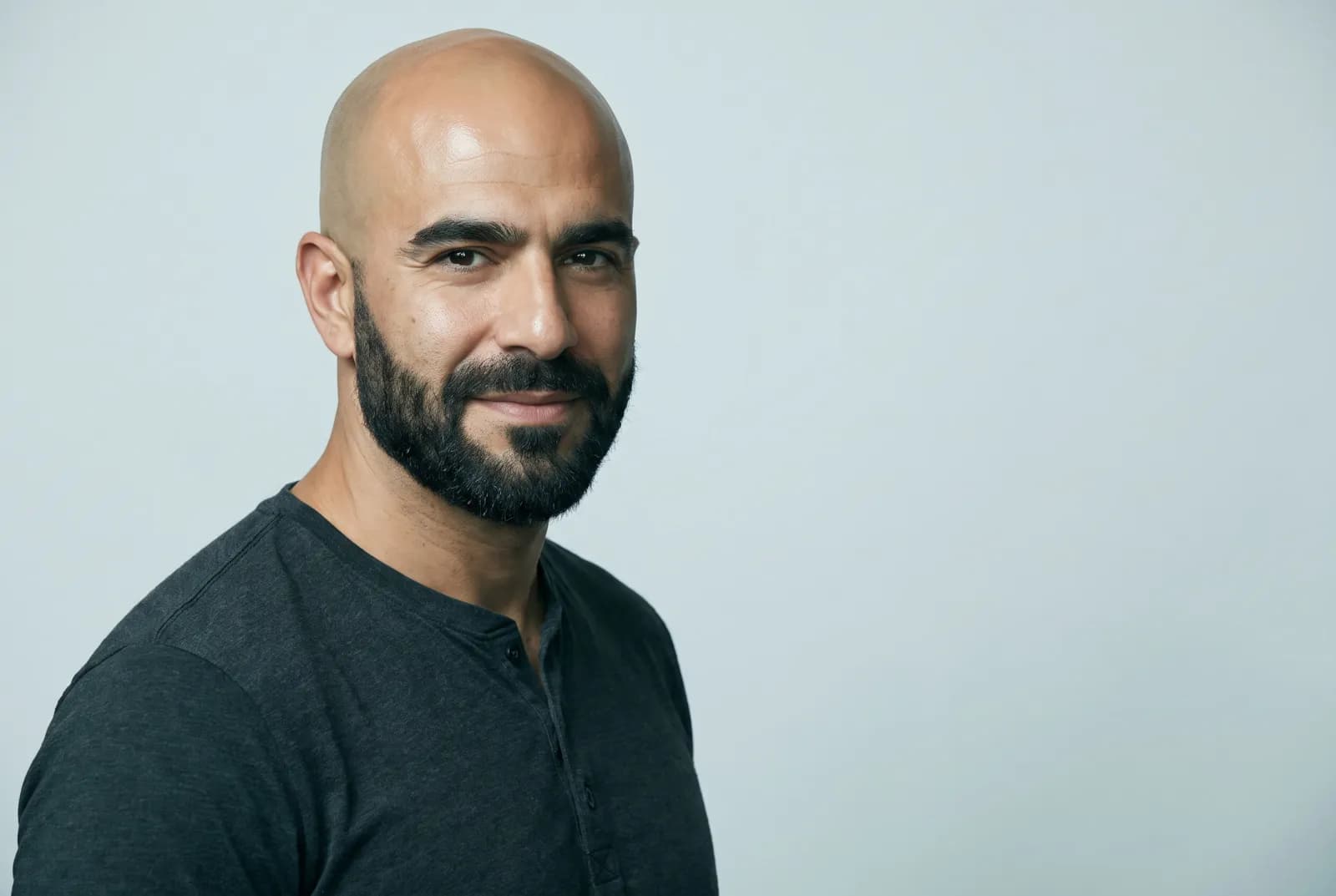
The single strongest predictor of a good shaved-head look is what's happening on the jaw. Stubble or a full beard restores the contrast a scalp of skin removes — it frames the face from below instead of above, and it signals that the bald head is a style, not a surrender. If you can grow even consistent heavy stubble, your odds are excellent; if your beard is genuinely patchy, the look leans harder on the next two factors (and on eyebrows, which do more framing work than anyone credits until they've watched for it).
Factors three and four: features and skin
A shaved head shifts attention to whatever remains: eyes, brows, bone structure. Strong or angular features generally gain from the exposure; softer features lose a layer of framing and often benefit from the beard compensating. Neither dooms anyone — but it explains why the same shave lands differently on different faces.
Skin is the quiet one: an even-toned, cared-for scalp reads healthy and intentional, while an untanned strip where hair used to be reads recent and provisional. This one is entirely fixable — a few weeks of even exposure or a decent moisturiser-plus-SPF routine, and the scalp stops looking like new territory.
The rehearsal that beats every preview
Filters guess; clippers report. A #1 buzz previews skull shape, stubble pattern and the social reaction at one week's commitment, and it's the standard on-ramp for a reason. If the buzz sits well, the zero-guard weekend answers the rest — worst case, a month later you're back to where you started, holding actual data instead of a render.
And if the reason you're asking is a pattern that's advancing, it's worth knowing your stage while you experiment: the further along the scale you are, the more strongly the evidence favours short-or-shaved over holding on, and the stage pages spell out that case honestly.
Know your stage first. Every recommendation above keys off how far along you are - the free tool measures it from a photo, on your device, in a minute.
Measure my stageFAQ
Common questions
- How do I know if I'd look good with a shaved head?
- Check the four factors: feel your skull for real irregularities, assess your stubble growth, look at how strong your brows and bone structure are, and consider scalp skin tone. Then stop predicting and run the #1-buzz rehearsal — one week of a tight buzz answers more than any app.
- Do bald filter apps show what you'd really look like?
- They show a render of your photo without hair — same angle, same lighting, no stubble shadow, no beard interplay, no reality of movement. Fine as entertainment; poor as evidence. A £20 clipper produces a fully accurate preview that grows back.
- Does a beard help a bald head?
- More than any other single variable. Beard-plus-shaved-head restores facial contrast from below and moves the whole look into a deliberate style category. If you can grow one, grow it before you shave — arriving with the frame already built makes the transition land better.